 Sound of Sweden
Gotland Field Recordings: Raukar Coastlines, Visby, and a Bronze Age Grave
Every Gotland recording sorted by what's actually different about it — Fårö's raukar coastline for sleep or focus, a real winter storm at Visby, evening waves, and a walk through a Bronze Age stone ship grave.
Gotland is Sweden's largest island, sitting alone in the Baltic Sea — which makes for a rockier, windier coastline than most of the mainland. Most of what's recorded here comes from two places: Fårö, the smaller island off Gotland's northern tip known for its raukar limestone stacks, and Visby, the walled town on the west coast.
Fårö's raukar coast: pick sleep or focus

Use this: 9 hours Sound for Sleeping - Natural White Noise from Sweden: Digerhuvud - Gotland
9 hours of waves recorded at Digerhuvud on Fårö, Gotland — one of the island's raukar coastlines, where the sea moves around ancient limestone stacks.
▶ Watch on YouTubeDigerhuvud is one of the more requested recordings on the whole channel — waves breaking around ancient limestone stacks rather than onto flat sand, calm enough to be a good first pick if you're new to ocean white noise. Langhammars, further along the same raukar coastline, is more exposed to open wind, which gives it a brighter, more alert character — it was built specifically for daytime focus and study, not sleep. There's also a second, calmer Langhammars recording from a different day, closer to Digerhuvud's unhurried rhythm if you want the same location without the wind.
Brissund, and a real winter storm at Visby
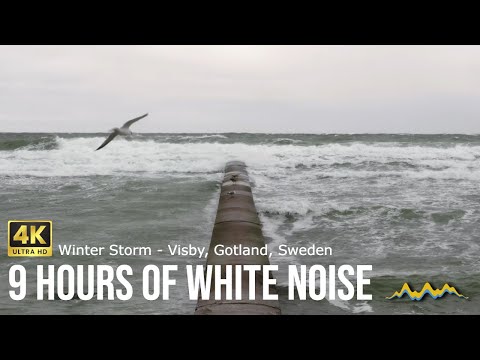
South of Visby, Brissund is calmer water — recorded once for relaxation and sleep and once for focus, same location, two different uses. For the opposite end of the scale, Visby's winter storm recording was captured during an actual storm rather than staged rough weather, which gives it more masking power if you need to cover louder background noise than a calm shoreline can handle.
Evening light: Galgberget and Nyhamn
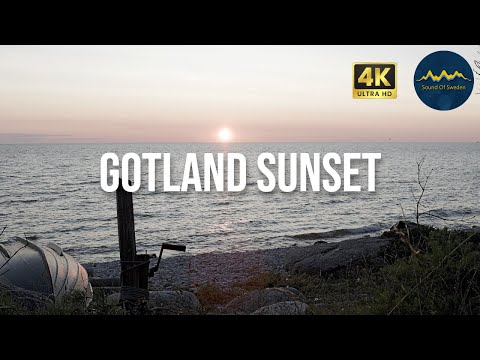
Galgberget, overlooking Visby, and Nyhamn, further down the coast, were both recorded as the light faded — evenings tend to catch the sea at its calmest, with less wind noise than earlier in the day, which makes both good wind-down tracks in the hour before sleep rather than just overnight loops.
Almedalen, Marteboljuset, and Tjelvars grav
Not everything here is coastline. Almedalen, the park inside Visby's town walls, is a city-ambience recording rather than open water. Marteboljuset is a stretch of the Martebo fields with a long local folklore reputation for strange lights seen at night — the recording itself is just the very still, rural quiet of the place after dark; nothing supernatural in the audio. Tjelvars grav, a Bronze Age stone ship grave on Fårö, is a walking recording rather than a static one — footsteps and ambience as the camera moves through the site, meant to be watched rather than run purely in the background.
Which one to start with
New to ocean sound and just want sleep: Digerhuvud. Working or studying during the day: Langhammars. Need something to mask louder noise: the Visby storm recording. Winding down in the evening: Galgberget or Nyhamn.
Frequently asked questions
- Where on Gotland were these recorded?
- Mostly Fårö's raukar coastline (Digerhuvud and Langhammars) and the area around Visby, including Brissund, Galgberget, Nyhamn, Almedalen, the Martebo fields, and a Bronze Age grave site.
- What are raukar?
- Raukar are limestone sea stacks — the resistant remains of coral reefs roughly 420 million years old, carved into their current pillar shapes as the softer surrounding rock eroded away over the thousands of years since the last ice age. Fårö's Digerhuvud and Langhammars coastlines are both raukar fields, which gives the waves there a more layered rhythm than an open sandy beach.
- Is there really a mysterious light at Marteboljuset?
- There's a long-standing local folklore reputation for strange lights seen across the fields at night. The recording doesn't claim to prove or explain it — it's simply a quiet, atmospheric night recording of the place.