 Sound of Sweden
Relaxing Nature Sounds: Why They Help You Unwind, and Which to Pick
Why natural sound — water, wind, birdsong — helps you switch off from stress, and how to pick a recording for winding down rather than sleeping or focusing.
Not every recording on this site is meant to put you to sleep or help you focus. Sometimes the point is smaller than that — five or twenty minutes to let a stressful morning or a long day settle before you move on to the next thing. That's a different job from sleep or focus sound, even when the recording is the same one.
What makes a sound relaxing rather than just quiet
Silence isn't automatically calming — an empty room can feel tense if your mind is still busy. What helps is something to listen to that doesn't ask anything of you: no lyrics, no dialogue, no notification to react to. Water, wind, and birdsong all vary constantly without ever demanding attention, which gives your mind somewhere to rest without anything to track.
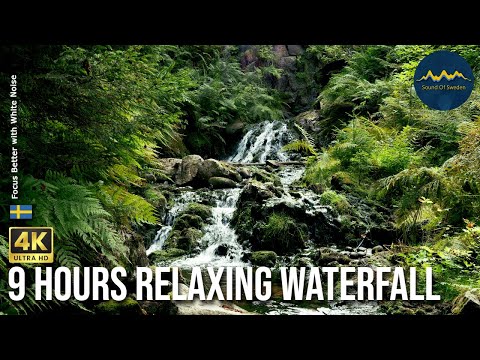
Use this: 9-Hour Relaxing Swedish Waterfall: Solvarboravinen White Noise for Sleep, Study, and Stress Relief
9 hours of a full waterfall at Solvarboravinen, Dalarna — a deeper, fuller counterpart to the gentle-stream recording from the same location.
▶ Watch on YouTubePick by texture, not by rule
There's no single "correct" relaxing sound — it's mostly about which texture your ear settles into fastest. Moving water (a waterfall or stream) tends to feel the most enveloping. Waves have a slower, rolling rhythm that suits people who find plain white noise too flat. Birdsong and forest recordings carry more natural variation, which some people find easier to stay with than a purely steady sound.
How to use it
Ten to twenty minutes with your eyes closed, away from a screen, tends to work better than leaving it on in the background while you keep doing something else — the point is the break, not the ambience. If you want something to run for longer, in the background, while you sleep or work, that's the same recordings doing a different job — see the white noise for sleep and white noise for ADHD and focus guides.
Frequently asked questions
- Why do natural sounds feel relaxing?
- Natural sound tends to be broadband and irregular in a gentle way — wind, water, and birdsong all vary moment to moment without any sharp, sudden peaks. That's a different listening experience from a notification, traffic, or a conversation, all of which demand attention. Because there's nothing to track or respond to, your attention has permission to drift, which is most of what "relaxing" actually means.
- What's the difference between a relaxation sound and a sleep or focus sound?
- The recording can be the same — the difference is how you use it. Played to unwind for twenty minutes with your eyes closed, a waterfall or wave recording is a relaxation aid. Left running for eight hours or during a work session, that exact same recording becomes a sleep or focus aid. Length and setting matter more than the sound itself.
- Do relaxing sounds actually reduce stress?
- This is general information, not medical advice, but shifting attention away from a stressful train of thought and onto something steady and undemanding — a technique sometimes called an attentional break — is a well-established idea in how people manage stress day to day. Natural sound is simply an easy, low-effort way to do that without needing quiet or stillness.